
Documents Found in Tattnall County Deed Records
Real-estate transactions, plats, liens and transfer-tax material all pass through the Tattnall County Clerk of Superior Court for recording. Related instruments go through it too. A filed deed image shows the parties and the conveyance language placed on record. The instrument type supplies helpful context. Remember, though, that an index label is not a legal reading of the document itself.
| Deed Type | What It Does | Common Use |
|---|---|---|
| Deed or bargain-and-sale deed | Conveys the interest stated in the instrument | Ordinary or specified transfers |
| Quitclaim deed | Conveys whatever interest the grantor states | Interest transfers and chain cleanup |
| Executor, administrator or assent | Moves or confirms estate property through fiduciary authority | Probate-linked transfers |
| Foreclosure or deed under power | Records a transfer tied to a power-of-sale process | Foreclosure chain research |
| Security deed | Records Georgia real-property financing security | Loan and release research |
Some instruments burden land without transferring it. A security deed, lien or easement can encumber the property you are actually chasing. Pull assignments, modifications, satisfactions and releases along with the original instrument. Otherwise the trail stops at a stale claim.
Probate connections matter too. Executor, administrator and assent instruments link a decedent's estate to a later conveyance. Foreclosure and deed-under-power labels signal a different process. They belong beside the related notices, security instruments and court files that explain them. Treat no single instrument type as a complete history on its own.
The Tattnall Clerk Is the Recorder Route
Georgia keeps no separate recorder-of-deeds office for Tattnall County. Instead, the Clerk of Superior Court serves as the county custodian of the deed records. The office maintains the indexes and microfilm and opens real-estate and most court records to public viewing.
Tattnall County Clerk of Superior Court
Paige D. Mulligan
PO Box 39, Reidsville, GA 30453
912-557-6716
paige.mulligan@gsccca.org
The accessible county page lists no counter hours. It publishes no copy and certification fee schedule either. Call the office before traveling. Ask for a current quote tied to the exact book, page and copy type you need.
Plats, liens, personal-property instruments, UCC matters, trade names and court records also sit with the clerk, according to the county page. For a parcel request, narrow your ask. Target the record families that touch the legal description. The clerk cannot offer legal advice or rule on what an instrument does.
Search Fields for Tattnall County Deed Records
The GSCCCA Real Estate Index guide lists the filters you can use: name, property, book/page, date, and instrument. It also covers property search by subdivision, unit, block, or lot for participating counties. Tattnall County deed records may not support every option.
| Mode | What to enter | What to retain |
|---|---|---|
| Party name | Grantor, grantee, exact or variant name | Both parties and party direction |
| Instrument | Deed, security deed, lien, release, plat or affidavit | Full instrument label and recording date |
| Property | Subdivision, unit, block or lot where offered | Legal-description match |
| Book/page | Known county recording reference | Image and cross-references |
| Date and geography | Range plus Tattnall County | Execution and recording dates |
A typical result names the parties, places the property and gives the book and page. Images open under the applicable account tier.
Record the details as you go. Save the exact index name, party direction, instrument label and county with each hit. Note the recording date too. A lender, estate or company may hold title under a spelling that differs from the owner of record you expected. Search both sides of the instrument, and keep the image citation. The GSCCCA name-search endpoint is the direct party route into Georgia real-estate records.
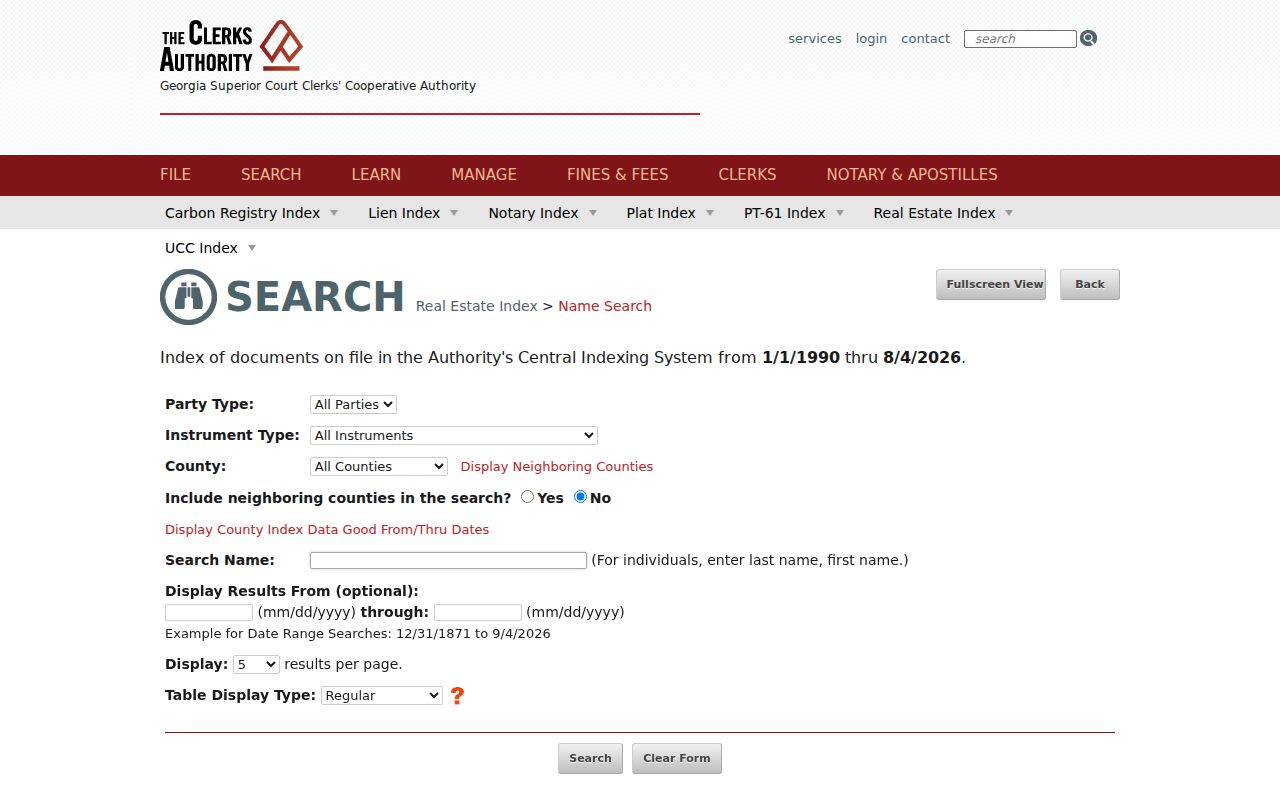
The search screen itself shows the choices that matter. Select Tattnall County first, then keep the party direction and date filters you used so the search can be repeated.
PT-61 Consideration Is Not an Appraisal
Every taxable Georgia deed transfer carries one PT-61 form. The form can add context to Tattnall County deed records, yet its consideration entry may be missing or may state only a nominal figure. It never establishes present market value.
Put the pieces side by side. Compare the deed and PT-61 context with the sale reference and assessment year on the parcel card. The recorded sale date, the tax value and any permit value answer different questions and often rest on different dates.
Walk Tattnall County's Grantor-Grantee Chain
A grantor/grantee index sorts by party names, not street addresses. Start with your strongest owner clue, then test it against the parcel description before trusting it. That habit keeps a common surname from dragging an unrelated tract into the chain.
- Find the latest deed in which the present candidate owner appears as grantee, meaning recipient.
- Read the grantor, legal description, recording date and any prior deed or plat references from the image.
- Search that grantor as a grantee to locate the deed by which the prior party acquired the same tract.
- Repeat while the description stays consistent, then shift to clerk books, microfilm or archive aids when online results stop.
- Grantor
- The party conveying the stated interest.
- Grantee
- The party receiving the stated interest.
- Chain of title
- The ordered series of instruments tied to the same land.
- Book/page
- The recording location used to retrieve an instrument in county records.
Older Tattnall Deeds Continue in Books and Microfilm
Statewide deed-index data reaches back to at least January 1, 1999, according to GSCCCA. The earliest Tattnall-specific online date is not stated. Do not treat 1999 as the start of the county's records. Do not assume every older book has been imaged.
For earlier material, the clerk's deed books and microfilm come first. The Tattnall County Archives holds original land grants, early plat books and historic court files. Its oldest described item dates to 1790, before the county's 1801 creation from Montgomery County. An early chain may therefore require Montgomery County or Georgia grant records.
The archive's Old Jail collection adds maps, newspapers, phone books and yearbooks. These can resolve vanished place names and puzzling surname initials. They yield clues only. The next link in a chain still needs the recorded conveyance for the same land.
Note: Ask for the relevant index volume and date range, not a broad search for every deed tied to a surname.
Tattnall Plats Decode Deed Descriptions
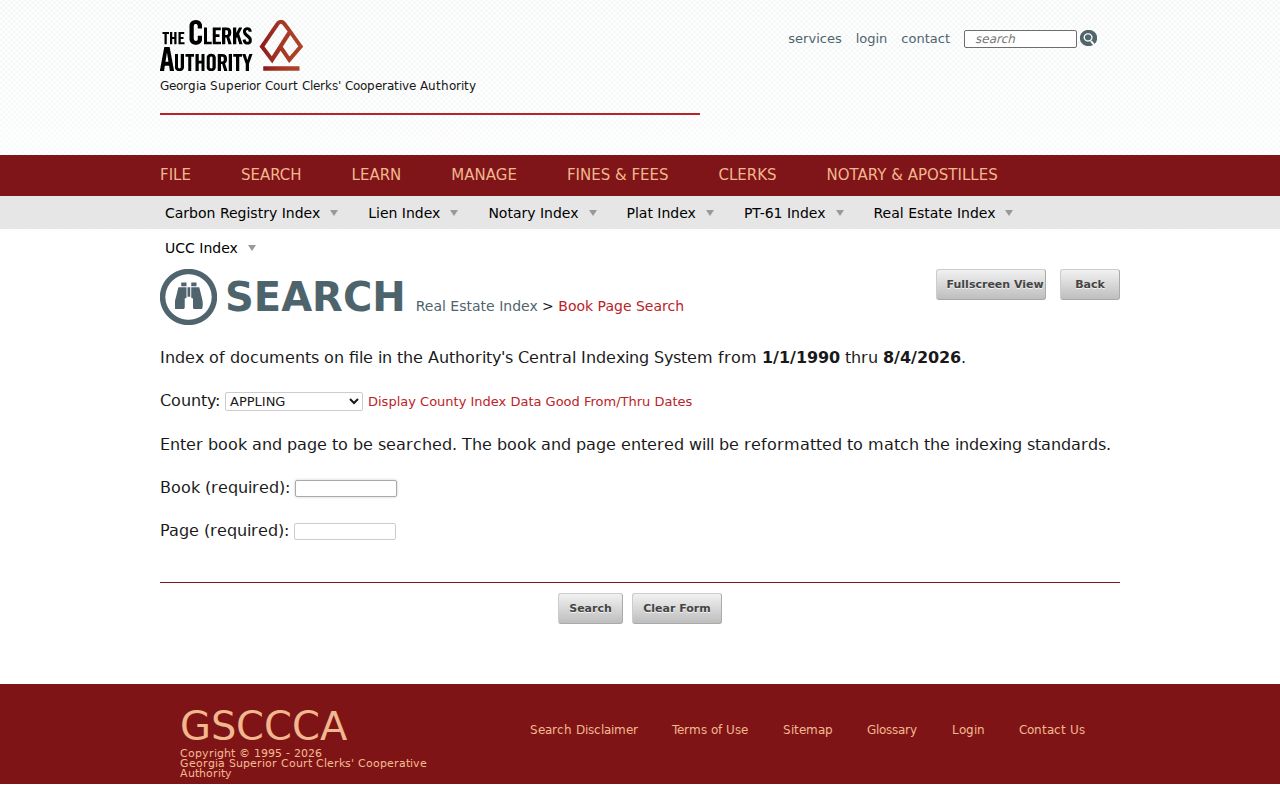
Deed language comes in several forms. A description may cite a subdivision lot and block. It may also cite a landlot and district, acreage, metes and bounds, adjoining owners or a road right-of-way. A plat turns many of those words into a drawing. So search the cited plat book and page and compare it against the full conveyance language. A known citation goes directly into the GSCCCA book/page search.
Skip the broad surname search and go straight to the parcel, because a name match alone proves little. Check the county and legal description before accepting it. After a split, hunt down the parent tract. Follow every later plat, replat, vacated plat and new easement. The assessor map finds the parcel, not the line, and a 2026 local report shows why. A proposed three-lot division requested a 30-foot access easement. Officials cited a 60-foot paved-road standard. Treat the report as a clue, not proof. Seek the official plat and variance file for the parcel's true status.
Railroad Names Can Unlock Tattnall Deed Records
Tattnall deed descriptions can name a rail corridor or business of the past. No street search finds these on its own. Archive material lists Wadley Southern, Seaboard Air Line and Collins-Reidsville-Glennville lines. Glennville history adds more names. It records Georgia Coastal/Piedmont, Collins & Georgia, Savannah & Southern, and Register & Glennville. Search each name with surnames and plat references. Add right-of-way terms and easements too. Connect the historic clue to a modern parcel only after the legal description and later deed chain agree.
Deeds, Liens and Releases Must Be Read Together
GSCCCA splits its indexes by route: real estate, liens, plats, UCC and PT-61. For a financed parcel, search both sides. Run the borrower or grantor and the lender or grantee. Then follow assignments, modifications and the final satisfaction or cancellation. A later assignment can change the holder without touching the assessor card.
Match every lis pendens, judgment, mechanic's lien or easement to its instrument and any release. A court docket explains the dispute. The recording reference comes from the land-record index. A missing web hit may simply reflect coverage, spelling or account limits.
For an easement, read the separate recorded instrument. It states width, use, benefited land, burdened land and maintenance terms. Map pixels cannot grant those rights. For a mechanic's lien, trace the claimant, owner, filing date and legal description. Note: also follow any cancellation or enforcement case.
Obtain a Tattnall County Deed Image or Copy
Start in the GSCCCA index. Use the account tier that allows the image or print access you need. If the image will not load, give the clerk the county, party names, instrument type, recording date and book/page. Real-estate records may also be viewed in the clerk's office. The county posts no copy and certification fee schedule. Ask the current price before mailing payment or ordering a large plat. Under Georgia Open Records Act fee rules, existing electronic records are often the most economical request. Certification and special handling can change the estimate.
A solid request names Tattnall County, the parties, the instrument type, the approximate recording date and the book/page. Say whether you want a plain image or certified paper. The online index may not search by address or APN. If not, ask the office's name or book-page route.
When the copy arrives, compare names, execution and recording dates, legal description, consideration, signatures, acknowledgments and cited plats or prior deeds. Keep every reservation, exception, easement and right-of-way clause with the chain. Then search the named parties and cited records for any correction, assignment, release or later conveyance. A certified copy certifies the office copy. It does not decide the legal effect of the words. For a purchase, estate, disputed line or encumbrance question, hand the complete set to a qualified Georgia title professional. One index row is not a title search. Locating Tattnall County deed records is a separate task from that review.
Estate transfers may need the probate file first. It names the executor or administrator. The later deed, assent or affidavit recorded with the clerk completes the trail. A death certificate and an assessor owner name do not substitute for that instrument trail. A tax advertisement or foreclosure notice deserves the same care. Follow it to the recorded deed and any court judgment, redemption record or later quiet-title action.
Old descriptions often skip the street. They use landlot, district, acreage, adjoining owners or a railroad instead. Copy every term exactly. Search the cited plat, earlier grantor and parent tract. Tattnall's 1801 creation from Montgomery County matters once the chain predates the county books. The Georgia Archives Virtual Vault and county archive finding aids can identify older material. But the chain still depends on matching the land in each conveyance.
Keep a clean packet. Separate deed, security deed, lien, plat, tax and court records. List the source, date, index term, book/page and image status for each item. If a release will not surface, mark it unresolved. Ask the clerk which index or older volume applies. Never assume the claim is still active.
Recorded, not guaranteed. Tattnall County deed records show what was accepted and indexed for record. An index result is not a title opinion, and unrecorded interests or indexing errors may require qualified review.